


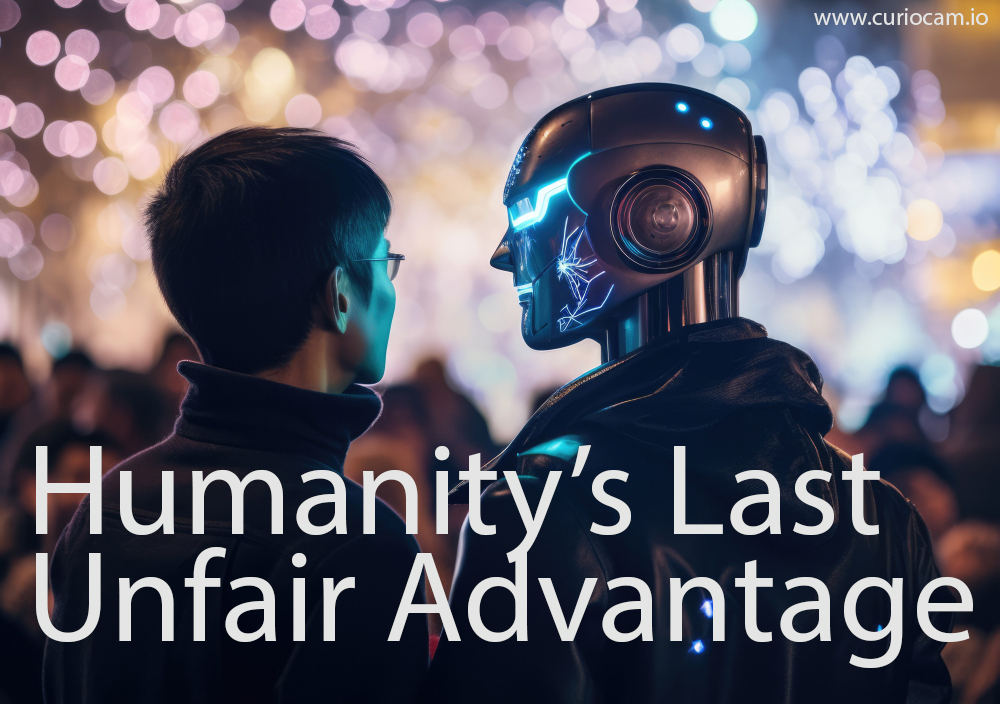




To many, this feels like an unfamiliar crossroads: adapt or decay.
In response, the most innovative among us are racing to acquire new capabilities — learning to harness AI through technical mastery, automation, and scale. Yet at a societal level, this response exposes a deeper problem. The faster we move, the more people we leave behind. Access to participation in the future is narrowing, not expanding.
So the question remains largely unanswered: How does humanity avoid becoming obsolete in a world increasingly shaped by artificial intelligence?
Perhaps the mistake lies in where we are looking for the answer. What if the path forward is not about teaching more people to compete with machines — but about raising a generation that learns alongside them?
Children today are not entering a world without AI. They are growing up inside it. The real challenge, then, is not technological—but educational. How do we ensure that these young humans develop their original intellectual capacity: the ability to ask questions, form meaning, make connections, and create worlds shaped by human choice rather than machine optimisation?
Over this series of blog posts, we explore a simple but radical idea:
that the future of humanity in an AI-powered world may depend less on what we teach children — and more on how well we protect, nurture, and activate their curiosity.




Join the discussion