When a 22‑year‑old grad student hit a paywall, she didn't wait for permission — she built Sci‑Hub. But she left the struggle to learn intact. Today, AI stands to remove that struggle entirely. In a world racing to eliminate friction, preserving the messy, human drive to understand the world may be our last unfair advantage.
In 2011, a 22-year-old graduate student in Kazakhstan named Alexandra Elbakyan ran into a wall that will feel painfully familiar to anyone who has ever tried to learn something outside the paywall-protected halls of elite institutions. She needed scientific papers — not to cheat, not to cut corners, but because she was burning with questions. Each paper sat behind a $30 tollbooth. The system told her, in effect, that her curiosity is welcome only if she can afford it. She refused to accept that answer.
Elbakyan taught herself to code, built a scraper, and created Sci-Hub — a shadow library that now delivers over 85 million research papers to anyone with an internet connection. It was legally radical, ethically complex, and wildly effective.
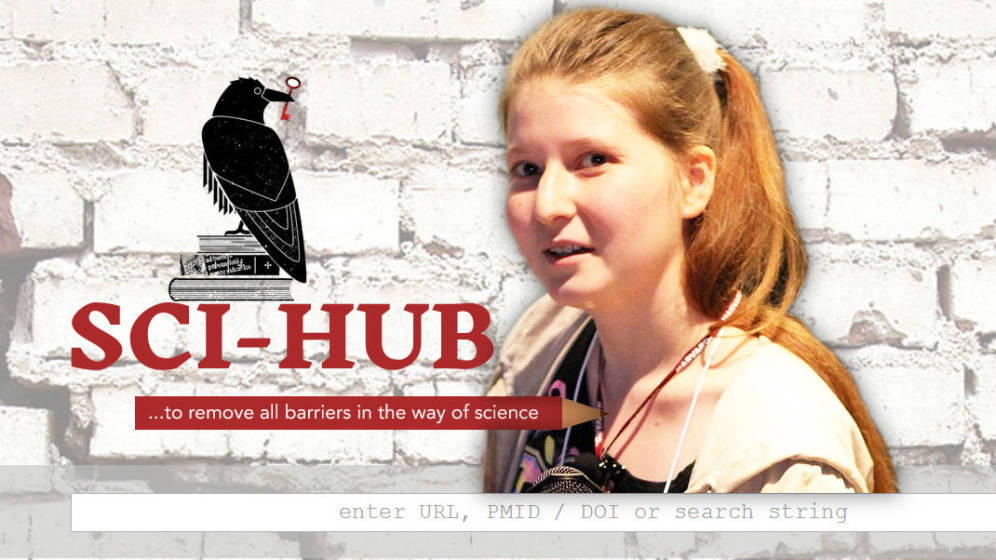
But here’s the part that often gets missed: She eliminated the gate, not the struggle.
Sci-Hub users still have to read, question, analyse, and synthesise. The friction that builds genuine understanding remains untouched.
A 2026 report from the Brookings Institution, A New Direction for Students in an AI World, puts it bluntly: the danger isn’t just that students use AI. It’s that they stop wrestling with uncertainty. When AI is optimised primarily for speed and task completion rather than learning, it erodes intrinsic motivation and attention. Learners become less willing to endure the productive struggle that durable understanding demands.
This is where Elbakyan’s story becomes a mirror. She faced an artificial barrier and built a door. Today’s student, faced with a perplexing question, is handed not just the door but the entire room, fully furnished, before their hand even touches the handle.
No locked gate. No door to build. No personal investment.
The risk isn’t that students will break rules to learn. It’s that they’ll never feel the urge to break anything at all — because the system has made curiosity feel unnecessary.
Real learning is messy. It happens in those tiny, electric moments of uncertainty:
If learners can act in that moment — to ask, to explore, to test what they think they understand — curiosity doesn’t just survive. It compounds. Confidence grows. Agency strengthens. Learning shifts from something done to you into a landscape you navigate on your own terms.
Every learning system — every app, platform, classroom routine — encodes an assumption about who gets to ask questions, who decides when help arrives, and whether uncertainty is something to be explored or something to be silenced. At scale, those assumptions shape not just academic outcomes, but equity, autonomy, and the long-term cognitive health of a society.
In an AI-rich world, choosing to preserve learner agency is not a technical tweak. It’s a decision about what kinds of thinkers — and ultimately what kinds of citizens — we are willing to cultivate.
So we must ask ourselves:
Designing for agency means ensuring that every learner has structured opportunities to question, explore, and construct understanding — not just the privileged or the fiercely determined. It doesn’t require abandoning standards, removing guardrails, or celebrating chaos. It requires, above all, high-quality environments that invite questioning instead of punishing it.
These questions are not just theoretical. They are already being answered — product by product, classroom by classroom — and some answers are far more hopeful than others.
Take CurioCam, a screen-free AI learning device built from the ground up with a single, stubborn design philosophy: agency comes first. It does not offer a touchscreen full of apps, nor does it hand children polished answers at the tap of a finger. Instead, it uses screen-free, voice-first multimodal AI to engage children in open-ended dialogue about the objects, books, and scribbles right in front of them. A child points at a leaf, asks why it’s brown, and CurioCam doesn’t just recite a fact. It asks what they think, offers a hint, invites them to find another leaf and compare. The conversation — and the thinking — stays with the child.
This is a deliberate rejection of the dominant AI design pattern: the frictionless answer-delivery machine. CurioCam introduces guided inquiry, the kind that sparks further questions and leaves the learner in control. Its screen-free nature matters deeply, too; it removes the infinite scroll of distractions, keeping the child’s attention on the physical world and their own emerging ideas. The AI is a curious companion, not an oracle.
In the language of our earlier metaphor, CurioCam refuses to hand over the fully furnished room. It helps children build their own doors — and then walk through them, again and again. It is a real-world attempt to answer “yes” to the questions that matter: yes, we can design for hesitation and inquiry; yes, we can teach children to converse with knowledge rather than just consume it.
Elbakyan’s Sci-Hub was born because a system denied her agency, and she had to break the rules to reclaim it. CurioCam represents the other path — not rebellion, but intentional design that preserves agency from the start. Both remind us that the future of learning hinges on a choice we are making right now, in code and in classrooms: will we hand learners the answers, or will we hand them the reins?
The answer will shape more than test scores - It will shape a generation’s capacity to wonder, question, and think for itself.
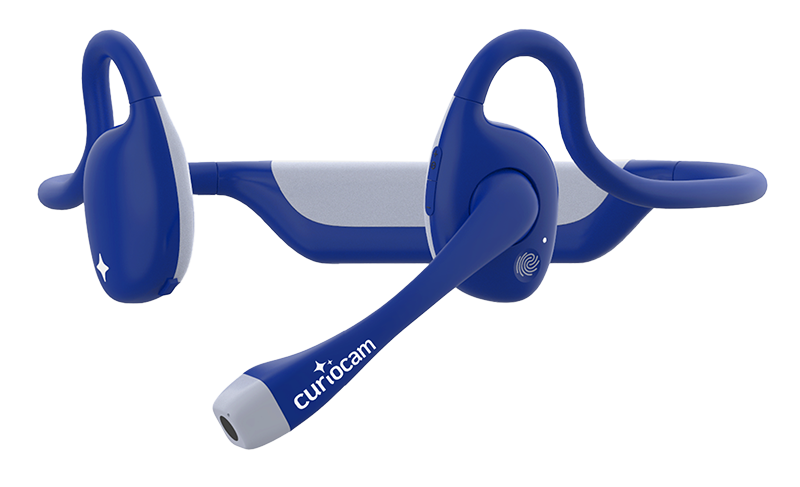
By untethering AI from the screen, CurioCam helps young learners transcend passive knowledge consumption and rediscover the joy of asking, observing, and understanding.
Learn more about CurioCam ->Stay curious. Subscribe for new articles, CurioCam updates, and the occasional thought that refuses to stay in draft mode. Unsubscribe anytime.
View our privacy policy for details.








Join the discussion