





My eight-year-old son asked me this the other day.
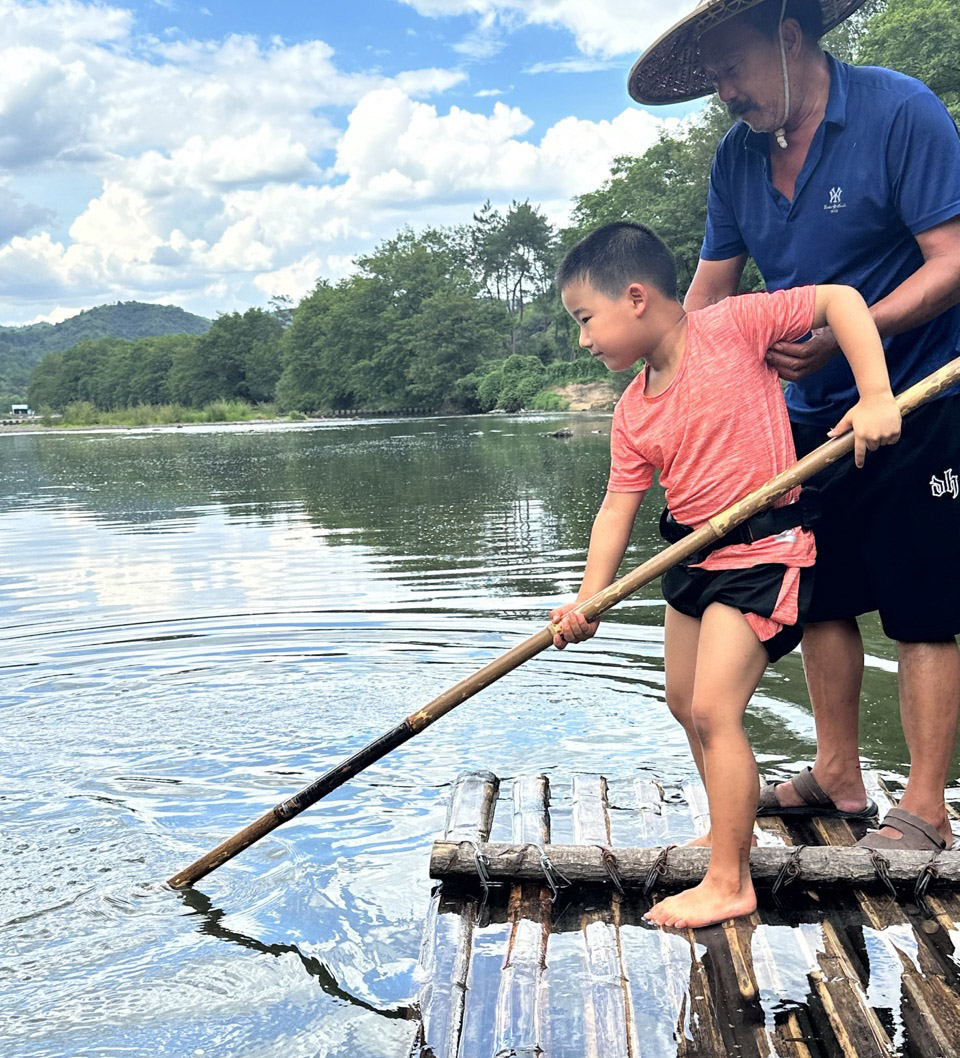
My first instinct was to smile and say, "Not yet, kiddo." I did a quick mental scan of his "knowledge reserve" — primary school math, basic geography, cartoon lore — and felt confident in my answer.
But then I paused.
I thought about the hours he spends in Minecraft. I thought about his recent fascination with nature — the specific names of stones, the life cycles of insects, the habits of amphibians. He has built a wealth of knowledge on these topics through conversations with Large Language Models that I am completely ignorant about.
Thirty years ago, his question would have been almost nonsensical. Parents were the unquestioned authorities, the walking encyclopedias, the gatekeepers of facts. Today, it's entirely plausible.
The Quiet Collapse of Epistemic Authority
Until recently, children generally assumed that the adults around them knew more about the world. Parents were not only their teachers, but at home they were usually the first person a child asked when something needed explaining.
That assumption is becoming harder to sustain.
An eight-year-old can now spend hundreds of hours exploring prehistoric creatures, astronomy, marine biology, mythology, or game mechanics, guided by an AI that patiently answers every question without tiring. Parents may have no idea how deep that knowledge has become. And here we arrive at the hard question:
If parents are no longer the children's encyclopedia, what becomes our most important role?
Choosing What Matters
The 'knowledge' my son has accumulated about Minecraft redstone or amphibian life cycles may not seem immediately valuable in the traditional economy. But perhaps we're judging it through an Industrial Age lens.
Knowledge has never really been the end goal. Knowledge is the material from which children build mental models. Whether the building blocks are dinosaurs, Roman history, Pokémon, fungi, or space telescopes — they are all helping a child construct their temple of understanding. By following an interest deeply, he is learning to notice patterns, connect ideas and ask better questions.
AI can give you every fact about wolves. But only a human can decide whether to follow that thread into ecosystems, mythology, fear, conservation, or genetic engineering. Each path creates a different understanding of the world.
And yet, as I sat with my son's question, I realized:
The real question is not how much he knows, but whether he is learning to see what matters.
Because soon, he will need me for something far harder than supplying facts: the human work of choosing between competing goods — especially when two reasonable choices conflict and neither comes without a cost.
That is where judgment begins.
Right vs. Wrong, Right vs. Right
Here is the most important distinction I have come to understand.
Knowledge can help us establish the facts and rule out some clearly bad choices. Judgment is needed when more than one defensible option remains.
Many of the decisions that shape life are like this:
- Should I tell the painful truth, or protect someone's feelings?
- Should I accept a promotion, or spend more time with my family?
- Should I maximize efficiency, or preserve dignity?
There isn't a correct answer. There is only a human answer.
AI can lay out the arguments, compare likely outcomes and recommend a course of action. But it does not have to live with the decision. It does not risk disappointing someone it loves, damaging a relationship or regretting the choice ten years later.
Our limitations are part of the reason moral choices carry weight. We have finite time, incomplete knowledge and relationships we can genuinely damage. Therefore we need to decide what to value, risk and take responsibility for. That responsibility is at the heart of judgment — and it may become more important as knowledge becomes easier to obtain.
What Unsettled Me
When I realized that there were already corners of the world my son understood far better than I did, that wasn't what unsettled me.
What unsettled me was realizing I no longer knew exactly what he knew, how he had come to know it, or which ideas were quietly shaping the way he saw the world.
The concern is not only whether an answer is factually correct. The examples an AI gives, the follow-up questions it suggests and the topics it leaves unexplored can all influence what a child notices and comes to regard as important.
I may not see those small influences accumulating. Without regular conversation, I may not know which assumptions are entering his view of the world — or have an opportunity to challenge them.
That makes my role more active, not less. I need to ask what he has been exploring, why a particular answer persuaded him, and what other perspectives might be missing. Otherwise, values can enter the conversation without ever being named or examined.
So what do parents contribute in this new reality?
Parenting has indeed evolved from dispensing facts and answers toward cultivating some of our most delicate human assets:
- Perspective — helping them see the bigger picture
- Values — guiding what matters and why
- Ethics — teaching them to consider consequences
- Emotional regulation — navigating frustration and uncertainty
- Context — understanding where knowledge fits in human life
- Judgment — deciding what to do with what they know
We are becoming less like encyclopedias and more like gardeners: unable to determine every direction of growth, but still responsible for the conditions around it. Our role has changed from filling their knowledge gaps to help them develop a few durable habits: asking where a claim came from, noticing what may be missing, considering who will bear the consequences, and recognising when certainty is unavailable.
These are acts of judgment.
The Scarcest Human Advantage
In Episode I - The Self-Fulfilling Prophecy, we said the world becomes what we believe it will be. In Episode 2 - Preserving Agency in the Moment of Curiosity, we said we must protect the messy, human-driven curiosity that AI threatens to smooth away. Now, in Episode 3, I offer this:
My son probably will know more than I do about many things. In some areas, he already does. What matters is whether he learns to question what he is told, recognise the values hidden inside a recommendation, and accept responsibility for the choices he makes. Those abilities will not emerge automatically from access to more information. They are learned through conversation, disagreement, mistakes and the example set by the adults around him.
I may not remain his most knowledgeable guide. But I hope to help him go further with the extraordinary knowledge available to his generation.



Join the discussion