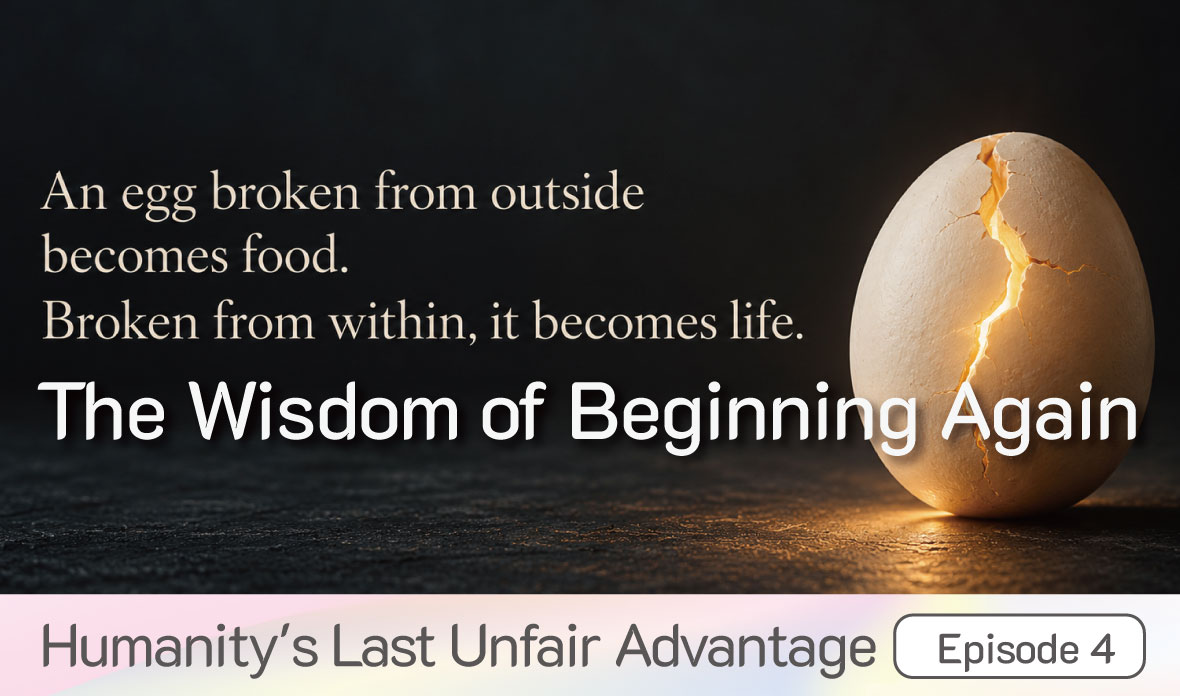
Imagine spending twenty years doing everything you were told would secure your future: earning the grades, passing the exams, landing the internships, collecting the credentials. Then AI begins performing the very tasks you trained so hard to master. You might find yourself asking: Have I spent twenty years optimising for the wrong thing? The fear reaches beyond employment. It unsettles the promise that intellectual achievement would secure a meaningful place in the world. In Episode IV of Humanity’s Last Unfair Advantage, I explore the grief inside that shift—and how wisdom might help us recognise a life we can choose as our own.
In September, Tao and other Fields Medallists warned that the race to solve mathematical problems could undermine the understanding, education and exchange of ideas that give mathematics its purpose. There is a brief historical echo: the Luddites textile workers defending skilled trades against industrial change. Now even the intellectual elite is being pushed into a corner, forced to defend what his work is for.
It would be unfair to suggest that those workers lost only their livelihoods, while today’s intellectual workers stand to lose something deeper. A craft can carry dignity, belonging and pride, whether it involves cloth or equations.
For those taught that intelligence was the safest route to a meaningful place in the world, this feels like the ground moving beneath us.
Having written the principal MQA attention kernel for DeepSeek v4.1, Liu anticipated a future in which AI could match or surpass his work. He expected to remain employed, but to become something resembling a “mecha pilot”: directing AI agents instead of personally designing, writing and refining the code he loved.
His account is sober and heart-wrenching. The livelihood may survive while the intimate pleasure of making disappears. A beautiful intelligence, cultivated through years of effort, can suddenly feel deprived of the work through which it expressed itself: the ability remains, but its familiar purpose slips away.
The loss Liu describes concerns the pleasure of doing work he loves. We need to distinguish that grief from a different anxiety: losing the recognition or standing that intellectual achievement has brought us.
For someone who has spent twenty years accumulating academic distinction, the question may become: Have I been optimising for something the world will no longer reward?
For some of us, intellectual superiority can sit quietly beneath AI FOMO. We fear being overtaken because being ahead has become part of who we are. From that position, every improvement in AI looks like a personal defeat.
An attachment to exceptionalism can make receiving help feel like surrender.
This is where wisdom begins to matter. It helps us examine what feels threatened: our livelihood, the pleasure of doing something well, or the sense of purpose we built around it. We are faced with a difficult question: If what I know and what I do best no longer give my life the meaning they once did, what might I choose to build it around?
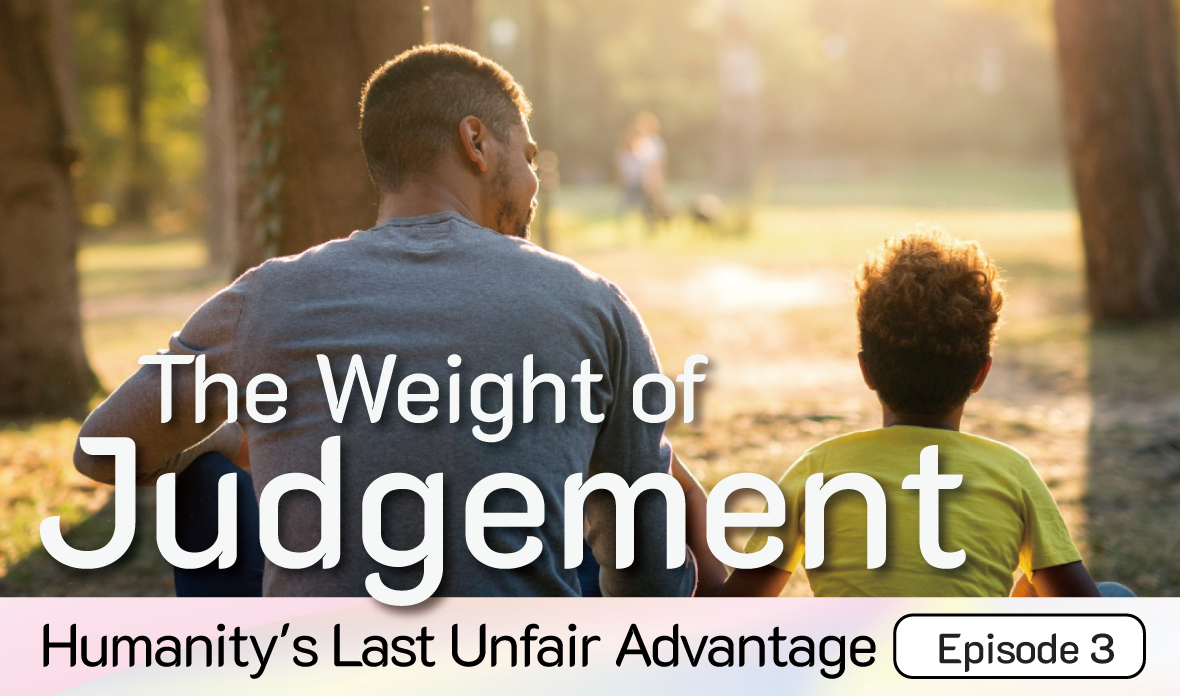
In Episode III — The Weight of Judgement, I explored the human responsibility of choosing between competing goods and living with the consequences. Wisdom grows through carrying that weight.
It takes time to understand what a choice asked of us: the fear we had to face, the desire we had to question, the effort we were prepared to make. We encounter the realities of our bodies, relationships, resources and mortality. We discover which burdens we can carry with conviction, and which ambitions belonged to someone else’s idea of a worthwhile life.
Through that slow and heavy inner work, we see the new reality emerge on the horizon. It helps us release the illusion that certainty was ever available, and choose with greater freedom. We can act, learn and change direction without treating every revision as a betrayal of ourselves. Eventually, we arrive at a way of being that is distinctly our own, even when the world’s rewards change.
Begin learning now. Use AI on real tasks, develop enough understanding to check its work, and move towards problems where its abilities are most needed.
Push beyond familiar routines. Try a different kind of project, speak to people outside your usual field, and explore new workplaces or places where your experience might become useful. Let concrete attempts teach you what watching the headlines cannot.
The open-source HowToLiveBetter guide offers a practical starting point. It weighs advice against cost, benefit and evidence, with attention to health, time, energy, money and personal freedom. Its appeal is the pursuit of a better life with less wasted effort: preserving the resources that give us room to choose. Here is a prompt adapted from that approach:
Allow yourself to become an observer for a while.
Notice what provokes you. Is it the possibility of losing income, the loss of a beloved activity, or the thought that someone without your training can now produce comparable results? These feelings can coexist, but understanding them helps you decide what needs attention.
If recognition is what you fear losing, try putting down the demand to defend your old standing. If it is the pleasure of a beloved craft, ask what space you can preserve for it—even as your paid work changes. Look again at the activity itself, the people it serves, and what remains meaningful to you. Try a different prompt:
Perhaps humanity’s last unfair advantage is the wisdom to see an almost unrecognisable world as it is — and recognise within it a life we can choose as our own. For me, that means questioning my assumptions, loosening my rigidity and setting aside my arrogance, including an unexamined sense that my worth depends on intellectual validation. From there, I hope to meet the forces reshaping our lives, including AI, with less resistance and greater curiosity, courage and enthusiasm.
What has AI unsettled, or opened up for you? I’d love to hear your perspective, the questions you’re still sitting with, or a prompt that has helped you see things differently. Share them in the comments; they may help someone else find a way forward, too.
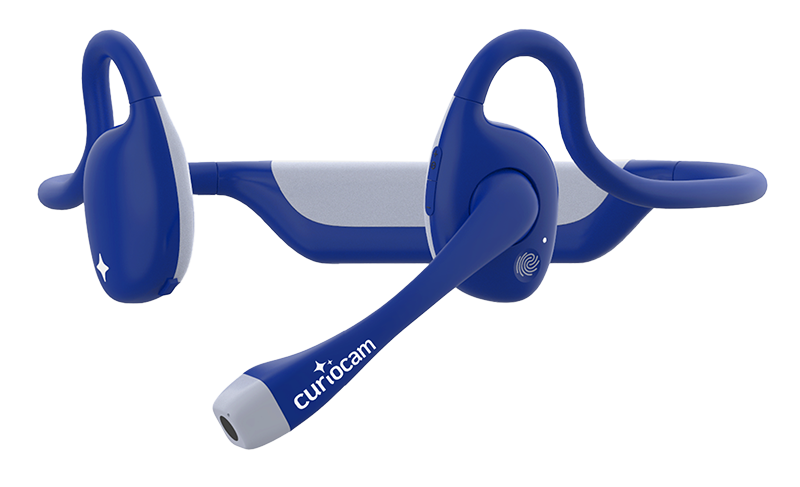
By untethering AI from the screen, CurioCam helps young learners transcend passive knowledge consumption and rediscover the joy of asking, observing, and understanding.
Learn more about CurioCam ->Stay curious. Subscribe for new articles, CurioCam updates, and the occasional thought that refuses to stay in draft mode. Unsubscribe anytime.
View our privacy policy for details.






Join the discussion